
**Collaborative post**
When you invite children into the kitchen, you introduce them to a place that contains sharp tools, hot surfaces, and fragile equipment. Cooking together can teach useful skills, but you also need to show them how to move safely around those risks. Clear explanations and repeated demonstrations usually work better than abstract warnings. Here are some simple ways to instil safe kitchen habits into your kids.
Explain the bigger picture
While you cook together, it’s a good idea to introduce the idea that food safety extends beyond the kitchen. Companies and regulators sometimes remove products from sale when they discover contamination or labelling problems. Teaching children about this will help them understand the full food supply chain and give them the tools they need to stay on top of food safety issues later in life. For example, you can show older children how to check official recall information pages so they understand how companies communicate about safety problems and what customers should do if they bought an affected product.
Why you should teach safe kitchen habits early
Children often watch adults cook and want to copy what they see. You can use that curiosity as a teaching opportunity. When you explain safety rules during everyday cooking, you give children a chance to practice careful behaviour while they handle simple kitchen tasks.
You don’t need formal lessons to teach kitchen safety. Children learn quickly when you explain what you are doing and then invite them to take part in simple tasks. It is important, however, to supervise them at all times when in the kitchen, so you can step in if they start handling tools incorrectly or get too close to a hot surface.
Here are a few basic things to teach children about kitchen safety:
- Equipment safety
Show children how to handle basic utensils before they use sharper tools. Mixing bowls, spoons, and spatulas help them practice coordination before they handle knives. - Heat awareness
Explain how hot surfaces cause burns. When you cook on the stove, point out that you turn the pan handles inward and keep cloth towels away from the burners. - Food handling
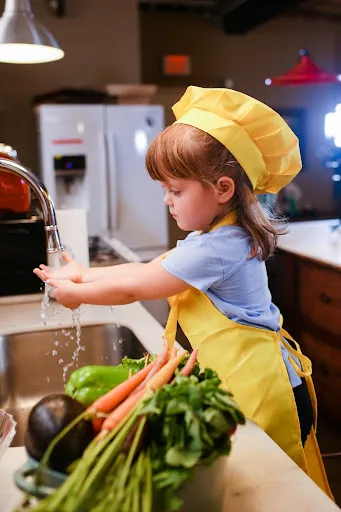
Show children how to wash their hands before handling ingredients and how to rinse fruits and vegetables before preparation. - Hand washing
Ask children to wash their hands before handling food and after handling raw ingredients. - Clean workspace
Show them how you quickly wipe up spills and return utensils to the sink after use. - Calm movement
Explain that running or rough play increases the chance of burns or cuts when people handle knives and hot pans.
Turning accidents into lessons
Minor accidents are bound to happen while children learn new tasks – your task is to make sure that accidents stay minor! When something goes wrong, explain what went wrong and show them a safer way to perform the task. Calm explanations will usually help children remember the rule more clearly than punishment.
Building confidence in the kitchen
As children grow more comfortable in the kitchen, you can gradually expand their responsibilities. Let them prepare simple snacks or help measure ingredients while you supervise. Repeated practice helps them build both confidence and safe habits while they cook.

Related Posts:



Discover more from Emmy's Mummy
Subscribe to get the latest posts sent to your email.
