
**Collaborative post**
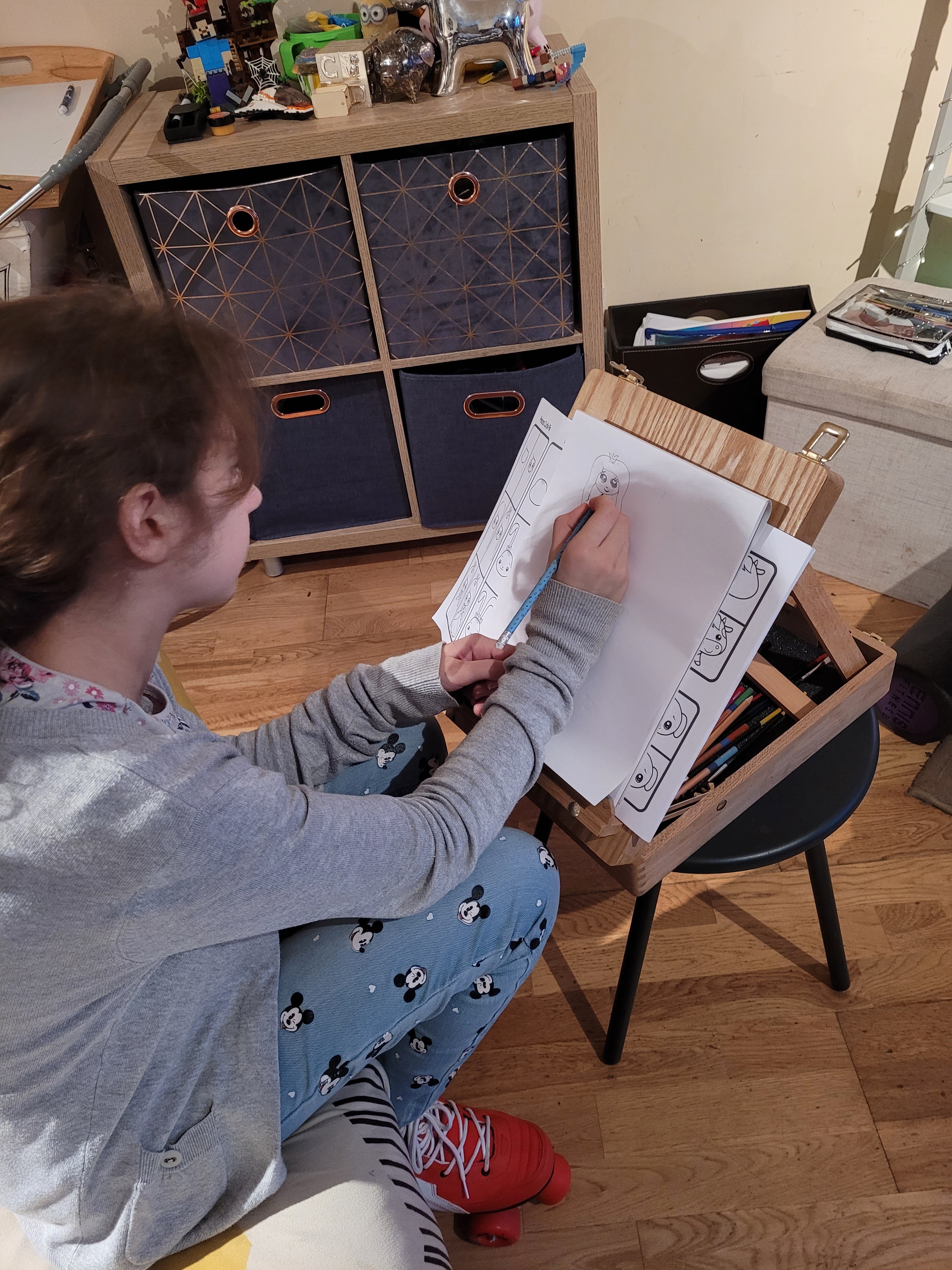
We are all back to home learning once again in some form. Schools are doing a great job of using zoom, teams and google classroom to engage the children in homes throughout the country and us parents are feeling a little less pained this time around.
It’s not to say it isn’t stressful, making sure the children are logged in, dealing with tech issues and making sure they stay focused. Of course, this doesn’t work for all of us, and we have to keep with a plan which suits, and adapt the best we can to deal with the limitations we may face.
For us as a family, the online lessons aren’t something which works – we have such a bad internet connection that having 3 of us online at the same time just crashes it and seeing as my job is solely online I have to prioritise the internet access for myself as keeping a roof over our heads, paying the bills and feeding us has to be my main focus. This isn’t to say that the children’s education isn’t important – it really is which is why I had to come up with a plan which would work for us. I am therefore homeschooling them myself with the school’s permission.
To start with the school provided learning packs so we completed these, but those have stopped but I’m not fazed this time around. There are so many amazing companies offering resources to help with homeschooling, some you pay a fee to use and others have free printables – I collected loads of the free ones during the last lockdown so we have been working through those. Twinkl is one of my favourites – I pay a subscription myself for this and it means I can download and print off age and level appropriate work for the children.
A recent introduction to our home learning has been to learn and research about different countries. We have made this extra fun and a little competitive too by going head to head to fact find. I let the children spin their globes and each day they each pick one country to learn about. I ask them to find out the capital of that country, draw the countries flag, find out and name a few landmarks from that country and a few facts too. They then go off on their own to see who can find out the most information within 30 minutes.
This is a test of their computing skills to see who can find the information I have asked – they can use the internet, Alexa and books to find out this information. Emmy tends to use the computer for this while Harry asks Alexa – it is quite interesting to see the different information they collect.
So far they have covered France, England and Germany – I am convinced there was some cheating in spinning the globe for those as they seem a little too easy to have been chance.
They are enjoying going head to head and by adding in that little bit of competitiveness it is ensuring they don’t lose focus on the task, and quite surprisingly is that Emmy has taken to helping Harry record his answers a little and to help him find the flags to draw etc. Teamwork at it’s best.
Facts they have learned this week include:
Landmarks:
England
- Big Ben
- The Houses of Parliament
- Buckingham Palace
- The Tower Of London
- Tower Bridge
- The London Eye
Germany
- Mount Zugspitze
- Lake Constance
- Eliz Castle
- Berlin Cathedral
France
- Eiffel Tower
- Louvre Museum
- Cathedral Notre-Dame
- Arc de Triomphe
Fun and/or interesting facts:
Germany
- The Christmas tree (Tannenbaum) tradition came from Germany
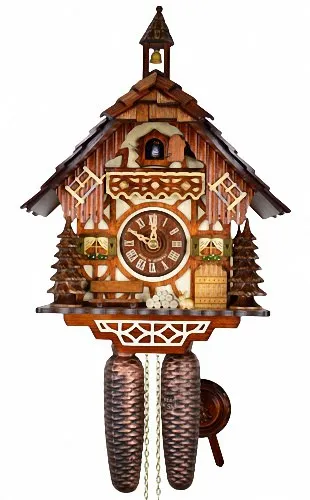
- Cuckoo clocks originated from the Black Forest in Germany and have been around since the 17th Century. They actually didn’t have Cuckoo’s inside until they evolved in 1737 when the German clockmaker Franz Ketterer added the cuckoo. The intricate components of the inside of cuckoo clocks required great skill to build, so it is seen as a true work of art as well as an icon of craftsmanship. Today, a few companies continue to uphold the same craftsmanship used to make these historic clocks. There are so many styles and designs to choose from, and the cuckoo clock has become an icon of Germany. Having your own cuckoo clock is a great family tradition even if you aren’t German. Cuckoo clocks are passed down from generation to generation, so consider starting this tradition in your family as children love the cuckoo clock. Cuckoo clocks can be a great way of teaching children to tell the time. Using an actual clock helps children as they can physically see the time moving which makes learning that bit easier -telling the time used to be something we did in schools, however, nowadays with digital watches, many children struggle to tell the time.
(Cuckooclock.com are offering all my readers 10% discount to use on their site – use code CUCKOO10 for a 10% discount, valid until 30/06/2021)
- University is free for everyone
- One-third of Germany is still covered in forests and woodlands
England
- England is the most populated country in the United Kingdom
- Football is the most popular sport in England but others such as Cricket and Rugby have large followings
- The Summer Olympic Games have been held in London 3 times – 1908, 1948 and 2012
France
- Liberte, Egalite, Fraternite is the national motto
- Kilts originated in France
- It is illegal to throw out food in France
- France has won the most Nobel prizes for literature
We also break up the day with fun games – cards, word games, board games etc – all have a little learning attached without the kids realising

I also personally pay for a readly subscription (if you sign up via this like we will both get a free months subscription) which is an online magazine subscription service – we all have our own profiles and can read the magazines of our choosing. I find this is a great way of getting the kids to read – Harry chooses comics such at the Beano to read and Emmy loves the official Jacqeline Wilson magazine & National Geographic kids. The kids love reading their magazines and I have the added bonus of no plastic tat attached to the front of them and they are reading/learning without realising it’s actually work.
We are also working through some Letts English and Maths books daily which have really helped the children to hone the skills they were learning in class.

How are you getting on with homeschooling this time around?
You may also like:
- A slower pace of life – choosing not to go back to school this school year
- Keeping Up Healthy Habits During Lockdown


Related Posts:





Discover more from Emmy's Mummy
Subscribe to get the latest posts sent to your email.
