Navigating Screen Time: How to Find a Healthy Balance for Your Family #AD
Posted on
**Collaborative post**
In today’s digital age, screens are an inevitable part of our daily lives. While technology has many benefits, it can also be challenging to navigate screen time for children. As parents, it’s important to set healthy limits on screen time, while still allowing kids to benefit from technology and stay connected with friends and family. Here’s how to find a healthy balance for your family.
Paediatricians recommend that children aged 2 to 5 have no more than one hour of screen time per day, while children aged 6 and older should have consistent limits on the amount of time they spend on screens. Seehere. Setting realistic limits on screen time can be a challenge, especially when kids are using screens for school, socialising, and entertainment. Consider balancing screen time by introducing brain-stimulating activities, such as exploring online free gaming sites, which offer fun and challenging puzzles to enhance cognitive skills. Start by setting a reasonable limit that works for your family’s schedule and stick to it. Consider using screen time as a reward for completing homework or chores, and encourage your kids to find other activities they enjoy, such as playing outside on toys like trampolines and climbing frames.
Encourage Physical Activity
While screens can be a great tool for education and entertainment, they can also be a sedentary activity that keeps kids indoors for long periods of time. Encouraging physical activity is important for children’s overall health and well-being. Make sure to set aside time for outdoor play every day, whether that’s playing on toys like trampolines and climbing frames or simply going for a walk or bike ride. The American Heart Association recommends that children get at least 60 minutes of physical activity each day, and screen time should be limited in order to make time for exercise and play.
Create Screen-Free Zones
Designating screen-free zones in your home can help create a healthy balance between technology and other activities. For example, consider making bedrooms and mealtimes screen-free zones, as well as any other areas where your family spends time together. This can help encourage more face-to-face interaction and promote a more active lifestyle. Additionally, be mindful of the types of screens that are present in your home. For example, consider limiting the number of televisions or computer screens in shared living spaces to reduce the amount of screen time for everyone.
Monitor Your Child’s Screen Time
As a parent, it’s important to be aware of what your child is doing on screens and how much time they are spending on them. Monitoring your child’s screen time can help you identify potential problems, such as cyberbullying, inappropriate content, or excessive use of screens. Keep an open dialogue with your child about their use of screens and encourage them to come to you if they encounter any problems or have concerns. Additionally, consider using parental controls or monitoring apps to help you manage your child’s screen time and ensure they are using technology safely.
Encourage Social Interaction
One of the benefits of screens is the ability to connect with others, but it’s important to encourage social interaction beyond screens as well. Encourage your child to participate in extracurricular activities, playdates, and family outings that involve face-to-face interaction. Additionally, consider using technology to help facilitate social interaction, such as video chats with relatives or friends who live far away. Encouraging a healthy balance between screen time and social interaction can help your child develop important social skills and maintain healthy relationships.
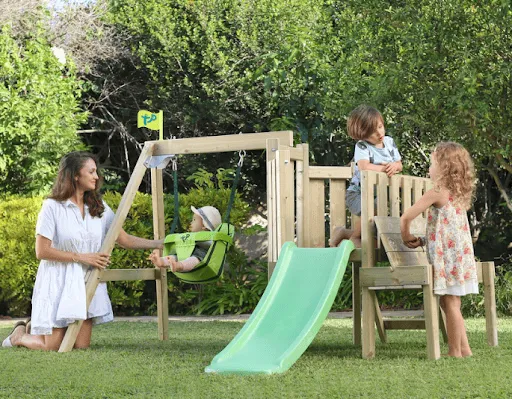
Playing Outside on Toys Like Trampolines and Climbing Frames
While screens can be a fun and engaging way to pass the time, they can also be a sedentary activity that keeps kids indoors for long periods of time. Playing outside on toys like trampolines and climbing frames can be a great way to balance screen time with physical activity and fresh air. Trampolines are a fun way to burn off energy and improve balance, coordination, and cardiovascular health. They can be used by kids of all ages and provide a great way to get some exercise while having fun.
Climbing frames, on the other hand, are perfect for kids who love to climb, swing, and hang from different elements. They encourage physical activity and can help build strength, flexibility, and agility. Kids can also use climbing frames to develop problem-solving skills and boost their confidence as they navigate the different challenges.
Playing outside on toys liketrampolines and climbing frames can also help improve mental health. Spending time outside in the fresh air and sunshine can boost mood, reduce stress and anxiety, and improve overall well-being. Plus, playing outside can help children develop a greater appreciation for nature and the outdoors, which can encourage them to be more environmentally conscious as they grow older.
When it comes to balancing screen time with outdoor play, it’s important to set boundaries and encourage a variety of activities. Consider setting aside specific times for outdoor play and making it a regular part of your family’s routine. This can help make outdoor play a priority and ensure that your child gets enough physical activity each day. Additionally, consider incorporating outdoor play into your child’s screen time by encouraging them to take breaks and go outside for a quick game of trampoline or climbing frame.
Conclusion
In conclusion, finding a healthy balance between screen time and outdoor play is important for your child’s physical and mental well-being. By setting realistic limits on screen time, encouraging physical activity, creating screen-free zones, monitoring your child’s screen time, and encouraging social interaction, you can help your child develop a healthy relationship with technology and the outdoors. Playing outside on toys like trampolines and climbing frames can be a great way to balance screen time with physical activity and fresh air, while also promoting mental health and well-being. So, make outdoor play a priority in your family’s routine and watch your child thrive!
Subscribe to get the latest posts sent to your email.
Clare
Hi, I'm Clare (Emmy's Mummy). A former Nanny and Mother of 2 - Emmy (born February 2010) and Harry (born October 2012). We are Essex based and share our adventures and misadventures of a busy crazy life.