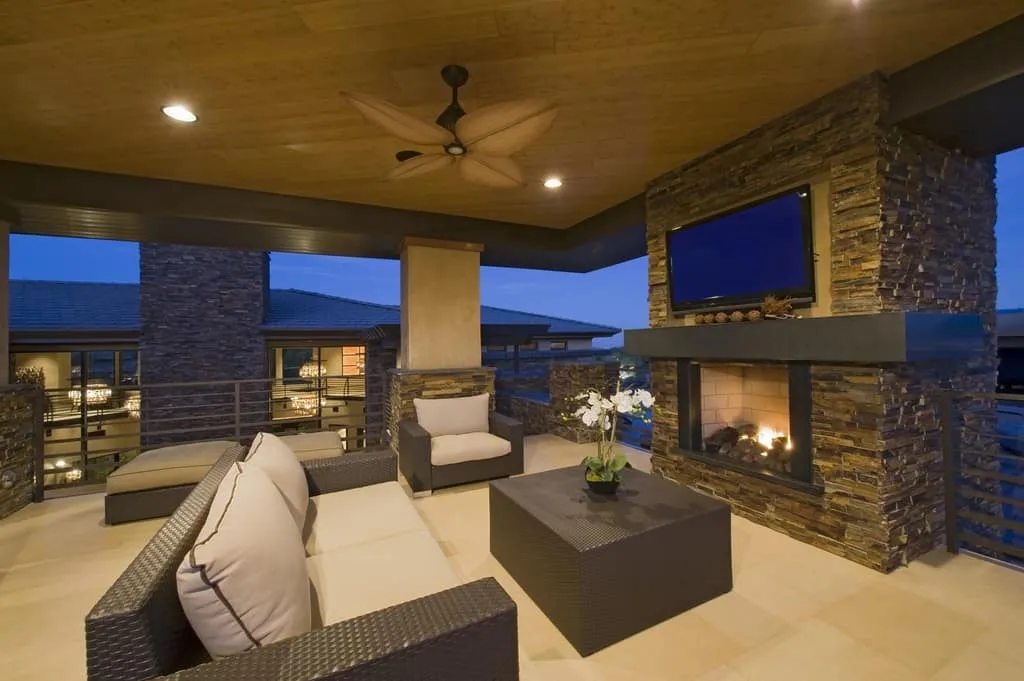
Are you interested in having a new fireplace installed? For many homeowners, the comfort and wonderful aesthetic of a fireplace is the perfect feature for their property. But you might not have realised the incredible variety of options available, ranging from electric fireplaces and gas fires to real woodburning stoves.
Each of the options has its own advantages and disadvantages and the one that is right for your property will depend entirely on your circumstances and requirements. Here we will give you an overview of the pros and cons of the major types of fireplaces available. This will help you to make the right decision for your home.
Electric fireplaces have been popular for a long time, as they essentially offer the effect of having a real fire in your home, but the heat is available at the flick of a switch. Electric fires are effectively heaters that have been made to resemble a traditional fireplace. One of the great benefits here is that you can choose to locate your electric fireplace anywhere in the house – there’s no need to plan around a chimney or a flue. An electric mantle fireplace makes an amazing feature for a front room.
This means that you have a much broader range of options in terms of which room to put your fire in, but the furniture that you have around it. And, of course, electric fireplaces do not use combustible fuel which makes it generally the most environmentally friendly option.
The flames on an electric fireplace typically look less realistic than a gas fire (and much less than a real, woodburning fire). They are also less efficient and more expensive to run than a gas fireplace. So, while they might be a more sensible option in some regards, in others there are many reasons to choose an alternative.
The pros and cons of woodburning fireplaces
Woodburning fireplaces have the obvious benefits of the fire being ‘real’. The flames are real, the sound is real, and the smell is real. If the whole aesthetic of your home is traditional, a woodburning fireplace offers that authenticity that you just can’t quite get from gas or electric fires.
Many homeowners like to surround their woodburning fire with timeless marble or period detailing for a look to complement the fire. Get a woodburning fire going and you’re guaranteed a real atmosphere – it’s a really lovely feature piece from any living or dining room.
It should be noted, of course, that woodburning fires require more work and maintenance than other types of fireplaces. You’ll need to clean the chimney regularly and also remove ash from the fireplace to keep it in good working order.
They are also a little trickier to get going and need to be monitored any time that you want to have the fire burning. It should also be noted here that importing cheap wood from Europe for your wood burning stove isn’t great for the environment, so it is important to source wood locally.
The pros and cons of gas fireplaces
Gas fireplaces are extremely popular as for many people they combine the best of all worlds. Gas fires are very quick and easy to light, like an electric fire, but they also include some of the more ‘realistic’ elements of a woodburning fire. For example, gas fires can be vented through a flue or chimney, just like a woodburning fire, and the flames are typically real.
They are available in a huge range of styles and designs so it is very easy to find something that is suitable for your property – no matter whether you have a more traditional or modern aesthetic in your home. And as they are reliant on gas, rather than electricity, they will still function during a power cut which is often when people most need their fireplace.
To have a gas fireplace it is necessary to have gas running into your property. If this isn’t possible you can use LPG gas. And of course, you don’t get the truly real sensation of a fire in your home that you do get from a wood-burning stove. It all comes down to how much you prize the genuine experience.
Subscribe to get the latest posts sent to your email.
Clare
Hi, I'm Clare (Emmy's Mummy). A former Nanny and Mother of 2 - Emmy (born February 2010) and Harry (born October 2012). We are Essex based and share our adventures and misadventures of a busy crazy life.